Reactive Fabric Printing Technology Introduction
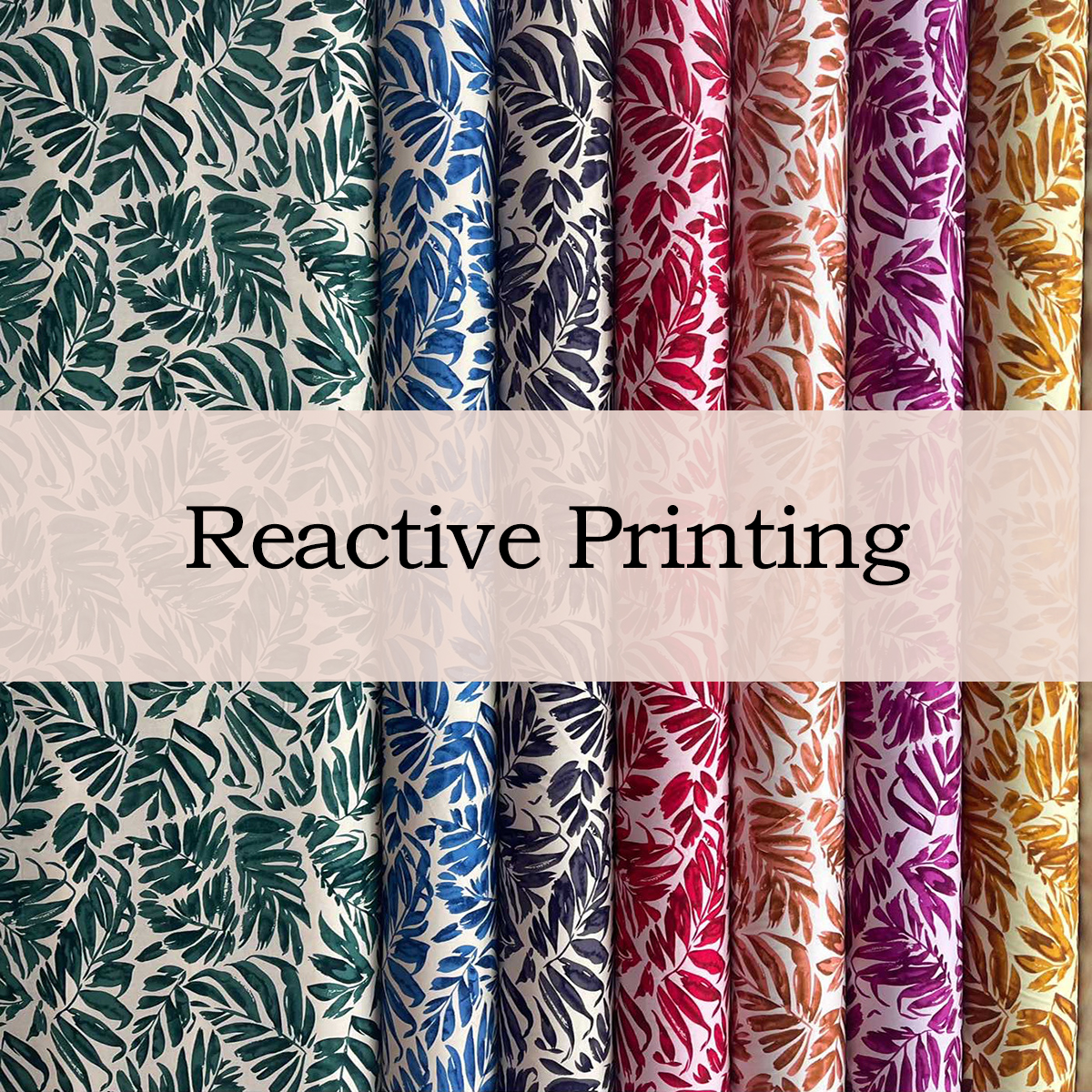
Reactive Fabric Printing Technology Introduction
Model NO: Reactive fabric printing
Process Overview:
Reactive fabric printing is a technique primarily used on cellulose-based fibers such as cotton, linen, silk and viscose. It uses reactive dyes that form a chemical bond with the fiber, producing bright, vibrant, and long-lasting colors. During the process, the dye is applied to the fabric through methods like screen printing or digital printing, followed by steaming or heat fixation to ensure the design is fixed firmly while keeping the fabric soft and comfortable.
Advantages and Limitations:
This method offers excellent color brightness, sharp pattern definition, and high wash and light fastness, making it ideal for detailed and complex designs. Its limitations include sensitivity to incorrect fixation conditions, a need for precise handling during steaming or washing, and suitability mainly for cellulose fibers, making it less effective on synthetic fabrics like polyester or nylon.
Ideal Applications:
Cotton: t-shirts, dresses, shirts, casual wear
Linen: table linens, curtains, summer apparel
Viscose: scarves, blouses, lightweight garments
Silk: scarves, silk shirts, silk dresses
Working With Facto Textile

Why Choose Us
- Experienced professional team
- Comprehensive fabric categories
- Fully customization options
- Advanced printing and dyeing technology
- Fast sample and production lead time
- Strict quality inspection and certifications
- Flexible minimum order quantities
- Competitive prices and reliable shipping
Contact Us To Start Your Fabric Project
Please send us your message, we will reply within 20 hours.
Facto Tex
Product & Service
Contact Us
No.888 ZhuJiaWan Street, Gusu District, Suzhou City, Jiangsu Province, China
