Pigment Fabric Printing Technology Introduction
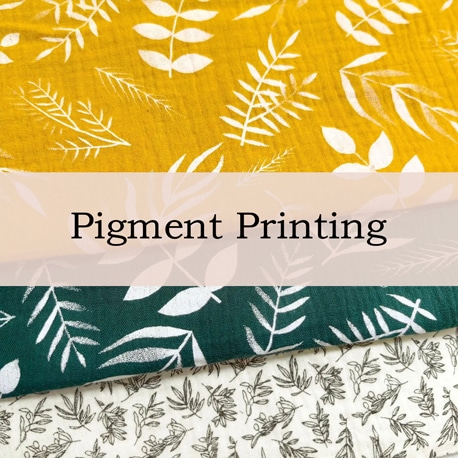
Pigment Fabric Printing Technology Introduction
Model NO: Pigment printing
Process Overview:
Pigment fabric printing is a widely used textile printing method in which insoluble pigments are applied to the fabric surface using a binder. Unlike dye-based processes, pigments do not chemically bond with the fibers; instead, they adhere to the fabric through a polymer binder that forms a film after curing. This process does not require steaming or washing, making it relatively simple and efficient. Pigment printing can be applied to a wide range of fabrics, including cotton, polyester, and blended textiles.
Advantages and Limitations:
The primary advantages of pigment printing include process simplicity, lower water and energy consumption, and compatibility with various fabric types without the need for fiber-specific dyes. It is also cost-effective and suitable for both light and dark fabrics. However, since pigments form a layer on the fabric surface rather than bonding at the fiber level, the resulting hand feel may be slightly firmer compared to other printing methods. In addition, wash and rub fastness, while sufficient for many applications, may not match that of reactive or vat printing.
Ideal Applications:
- Apparel: T-shirts, sweatshirts, hoodies, and other garments
- Bags: tote bags, canvas bags, and shopping bags
- Accessories: caps, hats, and other accessories
- Home textiles: cushion covers, pillowcases, and decorative fabric panels
Working With Facto Textile

Why Choose Us
- Experienced professional team
- Comprehensive fabric categories
- Fully customization options
- Advanced printing and dyeing technology
- Fast sample and production lead time
- Strict quality inspection and certifications
- Flexible minimum order quantities
- Competitive prices and reliable shipping
Contact Us To Start Your Fabric Project
Please send us your message, we will reply within 20 hours.
Facto Tex
Product & Service
Contact Us
No.888 ZhuJiaWan Street, Gusu District, Suzhou City, Jiangsu Province, China
