What Is Twill Fabric? Guide to Its Weave, Types and Where

If you look closely at your jeans or work jacket, you will probably notice a set of diagonal lines running neatly across the fabric. This is twill, one of the most widely used and reliable weaving techniques in history. In this guide, we will explain what twill fabric is, its characteristics, types, uses, care tips, and more.
What Is Twill Fabric?
Twill fabric is a type of textile defined not by the fiber it’s made from, but by the way the threads are woven together. Its most distinctive feature is the diagonal lines that run through the surface of the fabric. These lines, often subtle yet unmistakable, are created by a special weaving technique in which yarns weave up and down between multiple yarns in an interlaced sequence.
This weaving technique produces a fabric that is stronger and more durable than plain weave, with a natural drape that makes it comfortable to wear and versatile enough for many applications. Twill fabrics can be made from a wide range of fibers, from soft, breathable cotton to luxurious wool, or even durable synthetic blends.
Essentially, twill is not just a fabric, but a design principle that elevates the simple act of weaving into something both practical and beautiful.
Key Takeaways
- Twill is recognized by diagonal lines on the surface.
- It’s stronger, denser, and more wrinkle-resistant than plain weave.
- Made from many fibers: cotton, polyester, wool, blends, etc.
- Popular versions include denim, chino, gabardine, and herringbone.
- Used in clothing, uniforms, shirts, suits, upholstery, bags, and more.
History and Origin of Twill Weave
The story of twill weave stretches back thousands of years, long before the industrial revolution or the rise of modern fashion. Ancient civilizations discovered that by weaving threads in a diagonal pattern rather than a simple over-and-under grid, they could create a fabric that was stronger, more flexible, and more visually interesting. Archaeologists have found examples of early twill in Egyptian textiles, ancient Chinese fabrics, and even in medieval European garments, suggesting that this clever weaving technique was appreciated across the world.
Over time, twill became more than just a practical solution—it became a hallmark of quality. In the Middle Ages, it was used for everything from durable work clothing to cloaks and tapestries. Its diagonal lines not only provided structural strength but also added a subtle elegance, allowing twill to serve both functional and decorative purposes.
The industrial revolution brought mechanized weaving, making twill even more widespread. It was during this period that fabrics like denim and gabardine emerged, taking advantage of twill’s inherent durability. Denim, with its right-hand twill, became the fabric of choice for miners and laborers, while gabardine offered a tightly woven, smooth surface suitable for uniforms and tailored garments.
Today, twill continues to be a favorite in both fashion and industry. Its enduring appeal lies in the perfect balance it strikes between practicality and style. Understanding its history gives us a deeper appreciation for why twill has remained relevant for centuries, evolving from ancient handweaving techniques to the sophisticated fabrics we wear today.

How Is Twill Made?
Twill is created using a specific weaving technique in which the weft thread passes over multiple warp threads and then under one or more, forming a staggered pattern. With each row, the threads are shifted slightly, producing the characteristic diagonal lines on the surface of the fabric.
The genius of this design lies in its balance of strength and flexibility. By distributing the load across multiple threads, twill is naturally more resilient. It resists tearing better than many other weaves and holds its shape even after repeated wear. At the same time, the staggered arrangement of the yarns allows the fabric to drape softly, giving it a touch of elegance without compromising durability.
Twill can be woven in different thicknesses and densities depending on the intended use. A lightweight cotton twill might be soft and breathable, perfect for casual shirts or chinos, while a heavier wool or denim twill offers warmth and ruggedness for jackets or workwear. The weaving technique also creates subtle textures and a slight sheen, which not only adds visual interest but can help hide minor stains or creases.
Overall, the production of twill relies on precision in weaving to combine strength, flexibility, and texture, making it a versatile fabric for a wide range of applications.
Key Characteristics of Twill Fabric
Texture
The most distinctive feature of twill is the diagonal pattern created by its weaving technique. These lines not only give the fabric its recognizable appearance but also help distribute stress across multiple threads, which enhances its overall strength.
Durability
Twill is naturally more resistant to wear and tear than many other fabrics. Its strength makes it an excellent choice for garments that experience frequent use, such as jeans, jackets, and work uniforms.
Drape
The staggered arrangement of threads allows twill to drape smoothly and flexibly. This quality provides a comfortable fit for clothing while maintaining the structure needed for tailored pieces or outerwear.
Wrinkle Resistance
Although twill is not completely wrinkle-proof, its weave helps the fabric hold its shape better than plain-weave materials. This reduces the need for constant ironing and allows garments to look neat over long periods of wear.
Versatility
Anyone can choose twill fabric for clothing or industrial purposes. It is strong, durable, and comes in a variety of weights and textures, making it suitable for everything from casual shirts and trousers to work uniforms, jackets, and even upholstery.
How to Identify Twill Fabric?
Identifying twill fabric is easier than it might seem once you know what to look for. The most obvious feature is the diagonal pattern on the fabric’s surface. These lines are created by the weave itself and are usually visible when the fabric is held at an angle to the light.
Another way to tell twill apart from other fabrics is by its texture and weight. Twill often feels denser and slightly heavier than plain-weave fabrics, yet it still drapes smoothly. Running your fingers over the surface, you can feel the subtle ridges formed by the diagonal weave.
You can also check the front and back sides of the fabric. The front side usually shows more pronounced diagonal lines, while the back side may appear flatter and less distinct.
Finally, twill is generally more durable and resistant to creasing than many other fabrics. This practical property, combined with the diagonal pattern, makes it relatively easy to recognize once you are familiar with it.
What Are the Common Types of Twill Fabric?
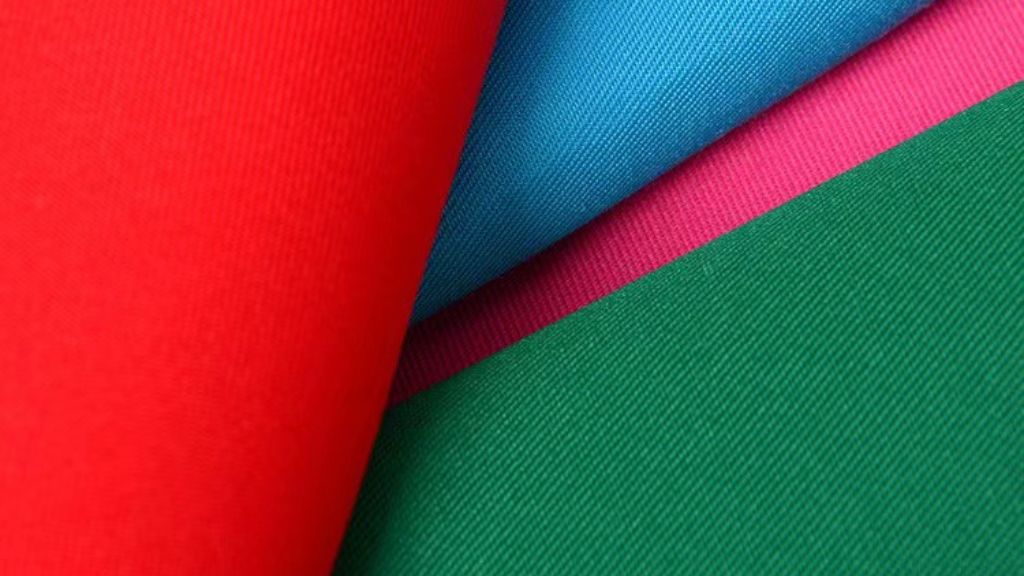
Cotton Twill
Cotton twill is woven entirely from cotton fibers, typically in a 2/1 or 3/1 right-hand twill pattern. The yarns are usually medium-thick, producing a soft but durable fabric. Cotton twill is breathable and absorbs moisture well, making it comfortable for everyday wear. Its diagonal ribs are pronounced but smooth, giving a subtle texture while maintaining a soft hand feel.
Polyester Twill
Polyester twill is woven from synthetic polyester fibers, which are strong, lightweight, and resistant to wrinkles, shrinking, and abrasion. Polyester twill often has a slight sheen due to the fiber properties and is less prone to shrinkage or color fading. Depending on the yarn thickness, its weight ranges from light to medium, and its surface is usually smoother than cotton twill.
Poly Cotton Twill
Poly cotton twill blends cotton and polyester fibers, typically in ratios such as 65/35 or 50/50. This combination produces a fabric that balances the softness and breathability of cotton with the durability and wrinkle resistance of polyester. It is commonly used for school uniforms, chef uniforms, and industrial workwear, providing both comfort and longevity.
Wool Twill
Wool twill is made from natural wool fibers, often worsted, which are tightly spun to create a smooth, dense fabric. The twill weave adds structure, while the wool fibers provide warmth, insulation, and a natural drape. Wool twill can range from medium to heavy weight and usually has a soft, slightly fuzzy surface. The tight weave improves resilience, wrinkle recovery, and thermal performance. It is often used for tailored garments like suits, coats, and scarves.
Chino
Chino is a specific type of cotton twill characterized by a fine, tightly packed weave. The yarns are generally combed cotton, which produces a smooth surface and a crisp feel. Chino twill is lightweight to medium weight, highly breathable, and relatively firm, which helps trousers maintain a clean silhouette.
Denim
Denim is typically made from 100% cotton and uses a 3/1 right-hand twill weave. The warp yarns are dyed (usually indigo), while the weft remains natural or lightly dyed, creating the classic diagonal appearance and color contrast. Denim is heavy, highly durable, and resistant to abrasion. The weave density and fiber thickness contribute to its characteristic stiffness, which softens over repeated wear.
Herringbone
Herringbone twill is usually made from wool or wool blends, though cotton and synthetic fibers are also used. The weave is a variation of the basic twill, forming a V-shaped zigzag pattern. The diagonal ribs are reversed periodically, which adds texture and visual complexity. Herringbone fabrics tend to be medium weight, resilient, and slightly textured to the touch.
Gabardine
Gabardine is a tightly woven twill made from wool, cotton, or blends. The warp threads are closely packed, producing a firm, smooth surface with fine diagonal lines. Gabardine is medium to heavy weight, wind-resistant, and highly durable. Its tight weave prevents sagging or stretching, making it ideal for structured garments like tailored trousers or trench coats.
| Type | Fiber | Weight | Texture & Appearance | Common Uses | Key Features |
|---|---|---|---|---|---|
| Cotton Twill | Cotton | Medium | Smooth, soft | Chinos, shirts, jackets | Breathable, comfortable, easy care |
| Polyester Twill | Polyester | Medium | Smooth, slightly shiny | Uniforms, workwear, bags | Durable, wrinkle-resistant, stain-resistant |
| Poly-Cotton Twill | Cotton/Polyester | Medium | Smooth, soft | School uniforms, chef wear, industrial clothing | Combines comfort with durability |
| Wool Twill | Wool | Medium-Heavy | Smooth, warm | Suits, coats, scarves | Warm, drapes well, wrinkle-resistant |
| Chino | Cotton | Light | Smooth, crisp | Trousers, casual pants | Lightweight, breathable, clean appearance |
| Denim | Cotton | Heavy | Rougher surface, classic diagonal lines | Jeans, jackets, workwear | Extremely durable, abrasion-resistant |
| Herringbone | Cotton/Wool/Blends | Medium | V-shaped zigzag | Suits, coats, home textiles | Decorative pattern, durable, structured drape |
| Gabardine | Wool/Cotton/Blends | Medium-Heavy | Smooth, firm | Tailored pants, trench coats, uniforms | Tight weave, wind-resistant, long-lasting |
What Is Twill Fabric Used for?
Clothing
Twill fabric is widely used in making jeans, chinos, jackets, suits, and workwear. Its strength, durability, and smooth texture allow garments to maintain their shape and appearance, while the natural drape ensures comfort for everyday wear.
Accessories
Twill is commonly used for bags and backpacks. The fabric’s sturdy weave allows these items to hold their shape and endure frequent use, while still providing a clean, polished look.
Home Textiles
Twill is applied in upholstery, curtains, and bedding. High thread count twills used in bedding provide a soft, smooth surface, while in upholstery and curtains, twill offers strength and resistance to wrinkles, combining durability with a subtle texture that enhances interior spaces.
Industrial
Twill fabric is also employed for tents and uniforms. Its dense weave and toughness allow it to withstand harsh conditions and heavy use, making it suitable for industrial applications where reliability and durability are essential.
How to Care for Twill Fabric?
Washing
Most cotton and poly-cotton twills can be machine washed with mild detergent. It’s best to use cold or lukewarm water to prevent shrinkage and maintain the fabric’s color. For wool twills, hand washing or dry cleaning is recommended to avoid felting or distortion.
Drying
Air drying is preferred for most twills to preserve their shape and prevent shrinkage. If using a dryer, choose a low-heat setting and remove items promptly to avoid wrinkles. Heavier twills like denim may be tumble dried carefully, but over-drying can make the fabric stiff.
Ironing
Twill resists wrinkles better than many other fabrics, but ironing may still be necessary for crisp garments. Use a medium-heat setting for cotton and poly-cotton, and a lower heat with steam for wool twills. Always iron on the reverse side when possible to protect the fabric’s surface texture.
Storage
Store twill garments folded or hung in a cool, dry place. Avoid overcrowding in closets, as twill can develop creases if compressed for long periods. For heavier fabrics, like gabardine or denim, hanging is often better to maintain shape.
Special Care
For patterned or high-end twills, such as herringbone or gabardine, follow any specific care instructions provided by the manufacturer. Spot cleaning and professional cleaning can extend the life of these fabrics while preserving texture and appearance.
What Are the Differences Between Twill and Other Fabrics?
Twill vs Poplin
Poplin is a plain weave fabric, which gives it a smooth, flat surface without the diagonal texture found in twill. While poplin is lightweight and crisp, it is generally less durable than twill and shows wrinkles more easily. Twill’s diagonal weave provides added strength and a subtle texture that hides minor creases.
Twill vs Canvas
Canvas is a heavy, plain weave fabric designed for maximum durability and rigidity. Compared to canvas, twill is more flexible and drapes better, making it more suitable for clothing and garments that require movement. Canvas, however, is preferred for items like tents, backpacks, and other applications where stiffness and toughness are critical.
Twill vs Drill
Drill is a type of heavy-duty cotton twill, often used in workwear. While both fabrics share the diagonal weave, drill is usually thicker and stiffer, designed specifically for protective and industrial clothing. Standard twill, by contrast, comes in a wider range of weights and can be softer, making it suitable for both casual and formal garments.
Twill vs Oxford
Oxford fabric is made using a basket-weave structure, which is a variation of the plain weave. This gives it a slightly textured, breathable surface. Compared to twill, Oxford is generally softer and lighter but less durable. Twill’s diagonal weave provides more strength, better wrinkle resistance, and a subtle texture that helps hide stains, making it more suitable for heavier garments like jeans, chinos, and jackets.
Conclusion
Twill is tough, versatile, and stylish all at once. It’s the fabric behind your favorite jeans, reliable uniforms, and even elegant coats. Strong enough to last, soft enough to wear comfortably, and textured enough to look good, twill proves why it’s been a wardrobe and home staple for generations. Whether you’re creating your next fashion collection or sewing at home, twill fabric provides endless possibilities. Visit Factotex to explore more twill fabrics.
FAQs
Q1: Is twill fabric waterproof?
A1: No, twill fabric is not inherently waterproof. Some twills may be treated with water-resistant finishes, but standard cotton or wool twills will absorb water.
Q2: Is twill fabric stretchy?
A2: Twill fabric has very little natural stretch unless blended with elastic fibers like spandex. Pure cotton, wool, or polyester twills are generally stable and retain their shape.
Q3: Is twill good for hot weather?
A3: Lightweight cotton or poly-cotton twills can be breathable and comfortable in warm weather. Heavy twills like denim or wool twills are better suited for cooler temperatures.
Q4: Which is more durable, canvas or twill?
A4: Canvas is generally heavier and more rigid, making it extremely tough for heavy-duty uses. Twill is strong too, but it offers more flexibility and drape, making it better for clothing while still being durable for many applications.
Working With Facto Textile

Why Choose Us
- Experienced professional team
- Comprehensive fabric categories
- Fully customization options
- Advanced printing and dyeing technology
- Fast sample and production lead time
- Strict quality inspection and certifications
- Flexible minimum order quantities
- Competitive prices and reliable shipping
Contact Us To Start Your Fabric Project
Please send us your message, we will reply within 20 hours.
Facto Tex
Product & Service
Contact Us
No.888 ZhuJiaWan Street, Gusu District, Suzhou City, Jiangsu Province, China
